I Stopped Painting My Rental—Here's Why My Cash Flow Increased in 30 Days
I thought painting my rental myself would save money. Instead, it delayed the project. The biggest lesson wasn't about flooring or paint—it was learning to stop being the worker and start thinking like a project manager.

For the first four or five years of my real estate investing journey, I played it safe.
I bought turnkey rental properties—homes that were already rent-ready, required little to no renovation, and could generate positive cash flow almost immediately. It was a predictable strategy. I didn't have to worry about contractors, construction schedules, or unexpected renovation costs.
And honestly, I liked it that way.
Then my very first long-term tenant moved out.
Seeing My Property Through Different Eyes
When I walked into the vacant property, nothing was technically wrong with it.
The roof was fine. The plumbing worked. The HVAC was in good shape.
But the house felt tired.
The laminate flooring had years of wear. The walls were covered with scuff marks. The trim had yellowed over time, and the doors looked dated.
If I had to rate it, I'd give it a 6.5 out of 10.
Could I have listed it immediately?
Absolutely.
Someone would have rented it.
But standing in that empty living room, I realized something.
For years, I had been buying value that someone else had already created.
What if this was my chance to create value myself?
That question led to my very first value-add renovation project.
My Biggest Mistake Was Thinking I Needed to Do the Work
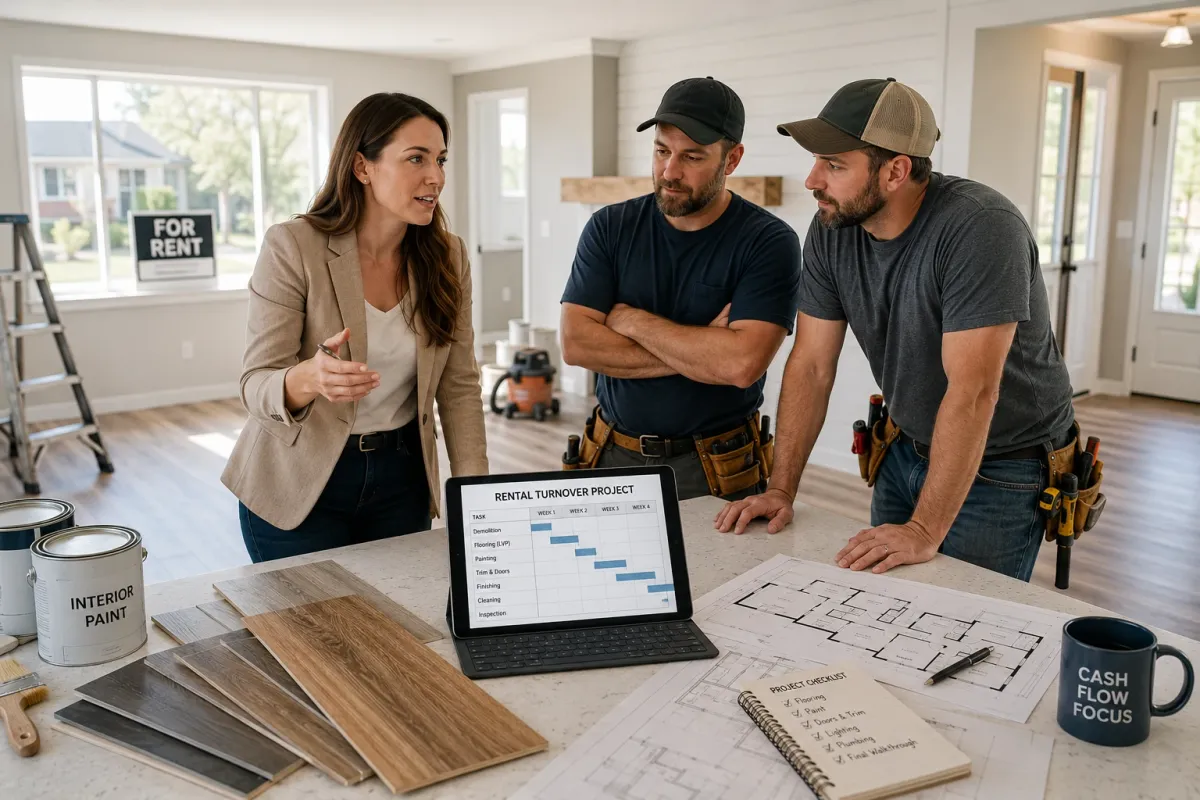
I gathered a small team—family members and a few skilled workers—and decided we'd handle the refresh ourselves.
My first instinct was simple.
"If I do some of the labor myself, I'll save money."
So I grabbed a paintbrush.
At first, it felt productive.
Every wall I painted meant one less hour I had to pay someone else.
At least, that's what I thought.
The reality looked very different.
An experienced painter could finish in an hour what took me an entire morning.
My lines weren't straight.
The trim needed touch-ups.
Some areas had to be repainted.
But the bigger problem wasn't my painting.
It was everything else that stopped moving while I was holding the brush.
No one was confirming material deliveries.
No one was coordinating the flooring schedule.
No one was ordering missing supplies.
I was busy.
The project wasn't.
The Moment Everything Changed
Halfway through the day, I finally asked myself one simple question.
"What is my real job on this project?"
It wasn't painting.
It wasn't installing flooring.
It wasn't patching drywall.
My responsibility was to deliver a better rental property, on budget and on schedule.
I wasn't supposed to be the painter.
I was supposed to be the Project Manager.
That realization completely changed the way I approached the renovation.
I put the paintbrush down.
When I Stopped Working, the Project Started Moving
Instead of trying to do everything myself, I focused on building a system.
The first decision was standardization.
We replaced the worn laminate flooring with Luxury Vinyl Plank (LVP) because it was durable, waterproof, and easy to maintain.
More importantly, it became the flooring standard for future properties.
We also selected one paint color for walls, doors, and trim—not because it looked trendy, but because using the same products across multiple rentals would simplify future maintenance, purchasing, and inventory management.
Good project managers don't make more decisions.
They eliminate unnecessary ones.
Next came the team.
Rather than hiring whoever was available, I started paying attention to something different.
Who showed up on time?
Who communicated well?
Who solved problems instead of creating them?
Who would I trust on the next project?
By the end of the renovation, I hadn't just completed a house.
I had started building a reliable crew.
Then I looked at another problem.
The property was about an hour from where I lived.
Every contractor visit required someone to hand over keys.
Every inspection required another trip.
So I installed a digital keypad lock.
Suddenly, I could give temporary access codes to contractors, inspectors, and cleaners without leaving my house.
One small upgrade removed hours of unnecessary travel.
From that point forward, I started asking myself a different question whenever I faced an operational challenge.
"Can this process work without me being physically here?"
If the answer was no, it wasn't a system yet.
The House Improved. But I Changed More Than the Property
The renovation itself wasn't dramatic.
We didn't gut the kitchen.
We didn't install luxury finishes.
We focused on what mattered most.
New LVP flooring.
Fresh paint throughout the home.
A few strategic repairs.
The transformation was remarkable.
The property went from feeling like a 6.5 to feeling like an 8 out of 10.
More importantly, we completed the turnover quickly.
The property was leased again in less than a month.
And this time, at a higher monthly rent.
That was exciting.
But looking back, the rent increase wasn't the biggest win.
The biggest win was realizing that I didn't have to be the person doing the work.
I needed to be the person making sure the work got done.
The Most Expensive Labor on the Job Was Mine
For years, I believed doing things myself was the cheapest option.
Now I see it differently.
As an investor, my time has value too.
Every hour I spent painting was an hour I wasn't improving the schedule, sourcing better materials, building contractor relationships, or planning the next project.
Saving labor isn't always saving money.
Sometimes it's the most expensive decision you can make.
That experience completely changed how I think about real estate investing.
Today, I don't ask,
"Can I do this myself?"
I ask,
"Can this property operate successfully without me doing it myself?"
I don't look for the cheapest flooring.
I look for the flooring I'll still be using five years from now.
I don't simply hire contractors.
I build long-term teams.
I don't renovate houses.
I build repeatable systems.
My Biggest Lesson
When I started this project, I thought I was renovating a rental property.
What I was really renovating was the way I operated my business.
Scaling a rental portfolio isn't about becoming better at painting walls.
It's about becoming better at designing systems that allow other people to do great work.
The day I put down the paintbrush wasn't the day I stopped contributing.
It was the day I finally started leading.
Real growth begins when your business no longer depends on your labor—but on the systems you've built.