I Stopped Investing Like a Beginner After Learning These 9 Brutal Lessons
**Excerpt** Real estate investing isn't just about buying properties—it's about building systems that protect your money, time, and peace of mind. Discover the practical lessons that helped me become a smarter investor in the U.S. rental market.

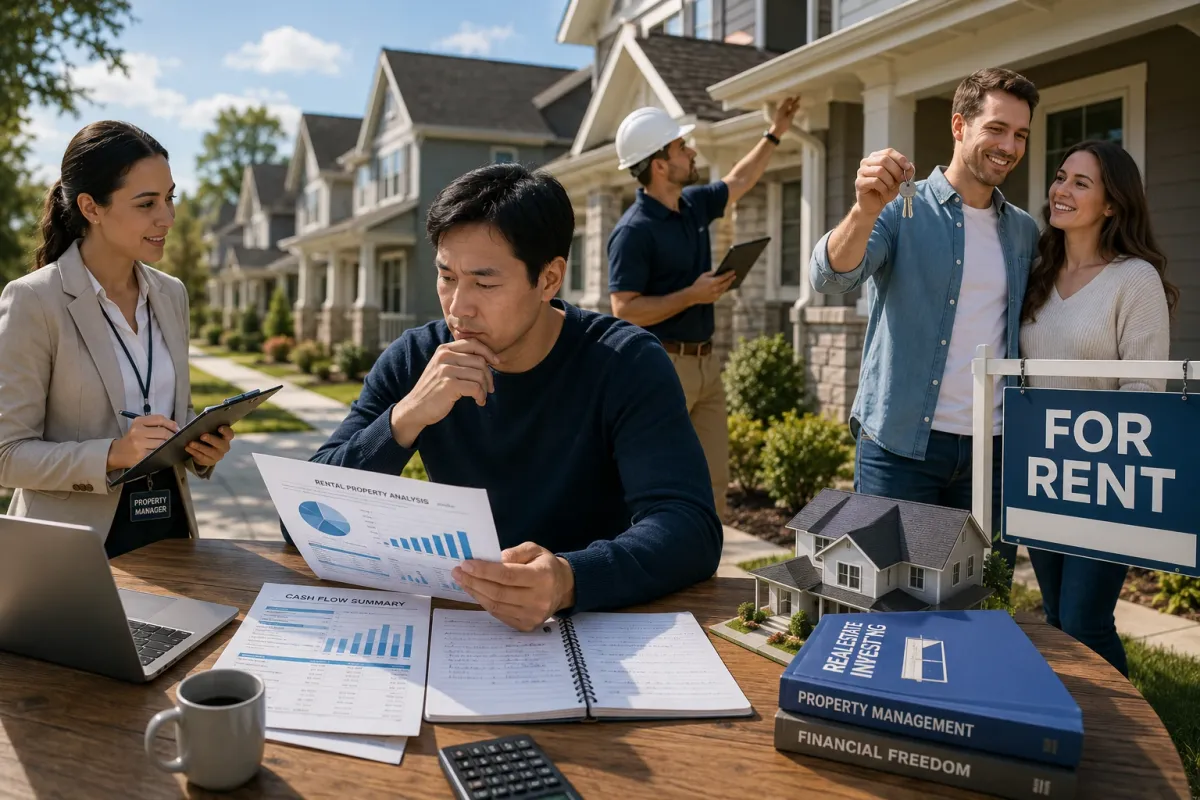
When I first moved to the United States, I thought real estate investing was a fairly simple equation.
Buy in a good neighborhood. Find a good property. Rent it to good tenants.
That was the plan.
But somewhere between buying my first property and managing a growing portfolio, I realized something had quietly changed.
Real estate isn't really about buildings.
It's about people. And it's about systems.
The biggest transformation wasn't in my bank account. It was in the way I looked at the world.
Years ago, I walked into a house and noticed the kitchen first.
Now I notice the electrical panel.
I ask how old the HVAC system is.
I wonder when the roof was last replaced before I admire the granite countertops.
Beautiful finishes are nice, but they don't usually wake you up at two in the morning. Deferred maintenance does.
That shift has made me a little less romantic about houses—and a lot more realistic about investing.
The Best Investment Isn't About Making More. It's About Losing Less.
When people talk about real estate, the conversation almost always starts with numbers.
Cash flow.
Cap rate.
Return on investment.
They're all important.
But after years of investing, I've found myself paying closer attention to a different set of numbers.
Unexpected repair bills.
Insurance increases.
Property tax reassessments.
Vacancy costs.
Emergency plumbing calls that somehow always happen on weekends.
Income doesn't always arrive exactly as planned.
Expenses usually do.
I've learned that protecting your downside often matters more than chasing another percentage point of return.
Sometimes the smartest investment decision isn't the one that promises the highest profit.
It's the one that quietly prevents the biggest loss.
The Right Tenant Is Worth Waiting For
Vacant properties have a way of making investors impatient.
Every empty day feels expensive.
It's tempting to convince yourself that "this applicant is probably good enough."
I've had those thoughts too.
Experience, however, has been remarkably consistent in teaching the same lesson.
Waiting an extra month for the right tenant is almost always cheaper than spending six months trying to remove the wrong one.
Now I don't mind slowing down.
I verify income.
I check credit.
I call previous landlords.
Because at the end of the day, we don't rent houses.
We rent homes to people.
And people—not properties—usually determine whether an investment succeeds quietly or becomes an expensive story.
A Property Manager Isn't a Vendor. They're a Business Partner.
I used to think a property management company simply collected rent and coordinated repairs.
That's technically true.
But it's also incomplete.
As my portfolio grew, I realized the best property managers don't solve problems.
They prevent them.
The less I hear from a great property manager, the more I appreciate them.
The opposite has also been true.
Every month seemed to come with another explanation.
"The repair was more complicated than expected."
"The contractor charged more than anticipated."
"This month was unusual."
Eventually I realized that "unusual" had somehow become routine.
These days, I spend less time comparing management fees and more time reading management agreements.
Who chooses the contractors?
How are maintenance costs documented?
Who owns the records if the relationship ends?
The answers to those questions matter far more than saving one percent on management fees.
Spreadsheets Tell the Truth—Just Not the Whole Truth
One of the things I love about investing is how orderly the numbers appear.
Every property fits neatly into rows and columns.
Every assumption has a formula.
Every projection feels logical.
Real life rarely follows the spreadsheet.
A tenant loses a job.
A city changes its regulations.
A storm damages a roof.
An insurance company rewrites its underwriting guidelines.
Suddenly, the neat little model you've built has to make room for uncertainty.
Good investors understand numbers.
Great investors also understand people.
The Bigger My Portfolio Became, the More Valuable Time Became
At first, I thought money was my most valuable resource.
Today, I'm convinced it's time.
Yes, I could mow the lawn.
I could repaint the walls.
I could answer every tenant phone call myself.
But eventually I started asking a different question.
Should I?
Every hour spent doing something that someone else could do well was an hour I couldn't spend finding the next opportunity—or simply enjoying dinner with my family.
Good systems don't just save money.
They give you your life back.
And I've learned that sometimes the greatest return on investment isn't measured in dollars.
It's measured in free evenings, uninterrupted weekends, and peace of mind.
The Greatest Lesson Real Estate Has Taught Me
Looking back, I don't think real estate taught me how to buy houses.
It taught me how to wait.
To wait for the right deal.
To wait for the right tenant.
To wait for the right market conditions.
Most importantly, it taught me not to rush decisions simply because I was afraid of missing an opportunity.
Sometimes the best investment is the one you decide not to make.
Sometimes a single sentence buried deep inside a contract saves you thousands of dollars years later.
Whenever I evaluate a new property today, I still ask myself the obvious question.
Will this property make money?
But I've learned to ask another one first.
Will this property let me sleep well at night?
Because real estate is both a financial game and an emotional one.
The best investments don't simply grow your wealth.
They quietly remove unnecessary worry from your life.
And after all these years, that may be the most valuable return I've ever received.
Frequently Asked Questions (FAQ)
1. What is the biggest lesson you've learned from real estate investing?
The most important lesson is that successful investing isn't about finding perfect properties—it's about building reliable systems. Good tenants, proactive maintenance, and strong property management often have a greater impact on long-term returns than buying at the lowest possible price.
2. Is property management worth the cost?
For many investors, yes. A good property management company can reduce vacancies, handle maintenance efficiently, screen tenants carefully, and save valuable time. The right manager is a long-term business partner, not just a monthly expense.
3. How do I choose the right rental property?
Look beyond cosmetic features. Evaluate the property's location, neighborhood trends, roof condition, HVAC system, electrical panel, plumbing, maintenance history, insurance costs, and potential long-term expenses before making a purchase.
4. What's more important: cash flow or appreciation?
Both matter, but sustainable cash flow provides stability during market fluctuations. Appreciation builds wealth over time, while consistent cash flow helps cover expenses and reduces investment risk.
5. How can I avoid costly investment mistakes?
Take time to perform thorough due diligence, verify property conditions, screen tenants carefully, review contracts in detail, and never rush into a purchase because of fear of missing out (FOMO).
6. Should I manage my rental properties myself?
Self-management works well for some investors with smaller portfolios and available time. As your portfolio grows, hiring a professional property manager often becomes a better use of your time and allows you to focus on acquiring and improving investments.
7. What makes a successful real estate investor?
Successful investors think beyond individual deals. They create repeatable systems, manage risk carefully, make data-driven decisions, and remain patient enough to wait for the right opportunities rather than chasing every deal.