7 Retirement Real Estate Moves That Beat Owning 12 Rental Properties
Owning more rental properties doesn't always create more freedom. Discover why experienced real estate investors are restructuring their portfolios through 1031 Exchanges, professional property management, and smarter retirement strategies that prioritize time, cash flow, and peace of mind.


When you bought your first rental property, the goal was simple.
Find a good location, buy at the right price, place a tenant, and collect rent each month. Over time, one property became two. Then two became five. Before long, you were managing more than ten rental homes.
For years, the focus was growth.
But as retirement gets closer, the question changes.
“Do I really want to keep managing all of this?”
That is when many real estate investors realize something important.
The issue is not how many properties they own.
The issue is how much time those properties demand.
The Portfolio Grew, But Freedom Shrank
Anyone who has managed multiple rentals knows the pattern.
One lease is ending.
Another tenant calls about a broken air conditioner.
An insurance renewal arrives.
Then comes a plumbing issue.
After that, a vacancy needs to be filled.
None of this is unusual.
It is simply part of owning rental property.
During your working years, you may have the energy to handle it.
But retirement is different.
The real question becomes:
“Do I want this to remain part of my daily life?”
That Is Why Restructuring Becomes Important
At retirement, the most important question is not:
“How much income does this portfolio produce?”
A better question is:
“How much attention does this portfolio require?”
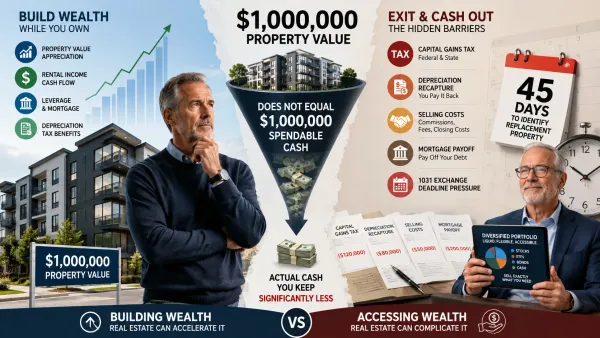
This is where many investors begin looking at a 1031 Exchange.
A 1031 Exchange Is Not Just About Taxes
Many people think of a 1031 Exchange as a tax strategy.
That is partly true.
But in practice, it is also a way to redesign your real estate portfolio without triggering an immediate tax bill.
The goal is not to eliminate taxes forever.
The goal is to defer taxes while moving into a structure that better fits your next stage of life.
For example, an investor may exchange several management-heavy rental homes for fewer, higher-quality properties in stronger locations.
The point is not simply owning fewer properties.
The point is having fewer decisions to make.
Is DST the Right Answer for Everyone?
Another option is a Delaware Statutory Trust, commonly called a DST.
DSTs are often presented to investors who want a more passive real estate structure.
They can reduce the burden of day-to-day management.
But they also come with trade-offs.
You usually give up a great deal of control.
Liquidity is limited.
Getting out early may be difficult.
Fees can also reduce the actual return you receive.
That is why experienced investors often ask a different question:
“Do I really need to give up this much control to reduce my workload?”
The More Practical Middle Step
In many cases, the more practical move is not selling everything or moving directly into a DST.
It is hiring a professional property management company.
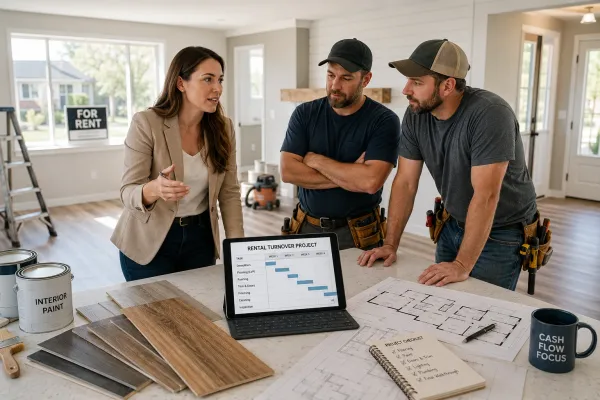
A good property manager can handle tenant placement, rent collection, maintenance calls, lease renewals, and many of the day-to-day issues that drain your time.
Yes, there is a management fee.
But many investors come to see that fee as the cost of buying back their time.
You still own the property.
You still keep control over major decisions.
But you are no longer the first person getting every call.
In Retirement, Cash Flow Matters More Than Return on Paper
When investors are younger, they often focus on return.
But as retirement approaches, the focus naturally shifts to cash flow.
It is not enough for rent to come in.
The income needs to be reliable.
A vacancy should not disrupt your lifestyle.
A repair bill should not create stress.
Rising insurance costs and property taxes need to be manageable.
In retirement, the best portfolio is not always the one with the highest return.
It is the one that produces stable income with the least emotional and operational burden.
What Experienced Investors Eventually Realize
After years of owning rental property, many investors come to the same conclusion.
“In the beginning, I wanted more properties.”
“Now, I want fewer problems.”
That shift is not a failure.
It simply means the purpose of the portfolio has changed.
During the wealth-building years, growth matters.
During retirement, sustainability matters more.
Retirement Planning Is About Simplifying Life
A 1031 Exchange, a DST, and professional property management are all just tools.
The real goal is the same:
to make sure your assets do not control your life.
In retirement, the most valuable asset may not be another property.
It may be time.
Time with family.
Time to travel.
Time to enjoy a day without checking your phone for tenant issues.
If your real estate portfolio supports that kind of life, then it is doing its job.
Frequently Asked Questions
Is owning more rental properties always better for retirement?
Not necessarily. A larger portfolio can generate more income, but it also requires more time, management, and decision-making. As retirement approaches, many investors prioritize predictable cash flow and a lower management burden over simply owning more properties.
What is the main benefit of a 1031 Exchange?
A 1031 Exchange allows investors to defer capital gains taxes when exchanging one investment property for another qualifying property. For many retirees, it is an opportunity to restructure a portfolio into assets that are easier to manage while preserving investment capital.
Is a Delaware Statutory Trust (DST) a good option for retirees?
It can be, but it depends on your goals. A DST offers passive ownership and eliminates most day-to-day management responsibilities. However, investors should also consider its limited liquidity, reduced control, and fee structure before deciding whether it fits their retirement plan.
Should I hire a property management company instead of selling my properties?
For many investors, the answer is yes. Hiring a professional property management company can significantly reduce the workload while allowing you to maintain ownership and control over your investments. It is often a practical middle ground before considering more permanent restructuring options.
How many rental properties should I own in retirement?
There is no ideal number. The right portfolio depends on your financial goals, health, available time, and desired lifestyle. The better question is not "How many properties do I own?" but "How much attention do my properties require?"
What matters more in retirement: appreciation or cash flow?
While long-term appreciation remains valuable, dependable cash flow usually becomes the higher priority during retirement. A portfolio that consistently generates income with fewer surprises often provides greater financial stability and peace of mind.
When should I start restructuring my real estate portfolio?
Ideally, restructuring should begin several years before retirement rather than after it. Starting early provides more flexibility to evaluate tax strategies, financing options, estate planning, and management solutions without making rushed decisions.
What is the biggest mistake investors make before retirement?
Many investors continue focusing on portfolio growth when they should be focusing on portfolio simplicity. Retirement planning is not just about maximizing returns—it is about creating a portfolio that supports the lifestyle you want for the next stage of life.