8-Month Overseas Stay? Don't Touch Your 403(b) Until You Read These 3 Rules
Planning an 8-month stay abroad? Before withdrawing from your 403(b), understand the hidden costs of penalties, taxes, and lost compound growth. Here's a practical strategy to protect your retirement savings while maintaining financial stability overseas.

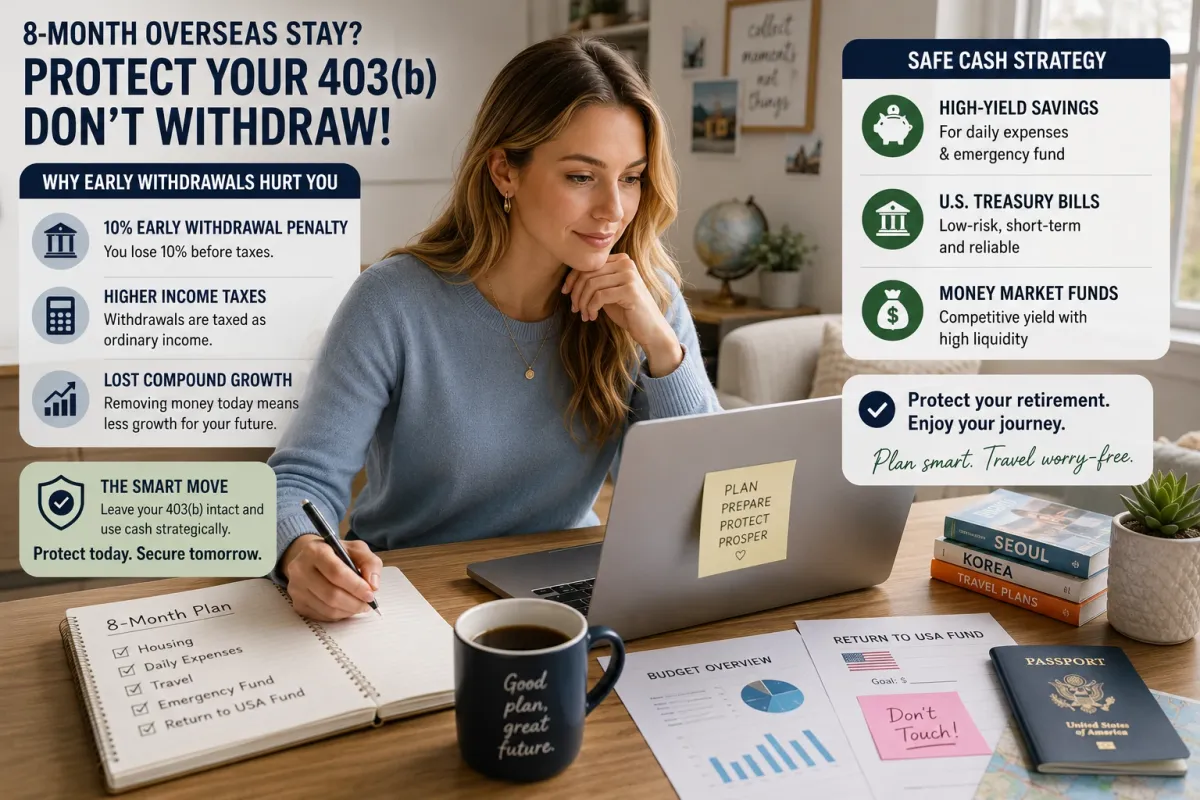
Planning a long-term stay overseas sounds exciting—until you start thinking about money.
For many professionals working in the United States, especially those contributing to a 403(b) retirement plan, one question often comes up:
"Should I use my retirement savings to fund my time abroad?"
At first glance, it seems reasonable. After all, it's your money.
But in most cases, touching your retirement account is one of the most expensive ways to finance a temporary stay.
The Bottom Line: Leave Your 403(b) Alone
If you're planning to spend around eight months abroad, preserving your retirement assets should be your first priority.
Your goal isn't to maximize returns during this period.
It's to maintain financial stability while protecting your long-term wealth.
Many people mistakenly view their 403(b) balance as available cash. In reality, early withdrawals can create significant financial consequences that far outweigh the short-term convenience.
Why Early 403(b) Withdrawals Are Usually a Bad Idea
1. Early Withdrawal Penalties
If you're under age 59½, withdrawing money from a 403(b) generally triggers a 10% federal early withdrawal penalty.
For example, a $30,000 withdrawal could immediately cost you $3,000 before taxes.
2. Additional Income Taxes
The withdrawn amount is typically treated as taxable income.
That means your tax bill could increase substantially depending on your total income for the year.
Many people focus on the cash they receive and overlook the tax impact until it's time to file.
3. The Hidden Cost: Lost Compound Growth
This is often the biggest loss of all.
Every dollar removed from a retirement account loses the opportunity to compound over the coming decades.
While an early withdrawal may solve a short-term cash need, it can significantly reduce your retirement savings in the future.
In many cases, the long-term opportunity cost is far greater than the immediate penalty.
A Better Alternative: Check for a 403(b) Loan
If you're still employed and your plan allows it, a 403(b) loan may be worth exploring.
Unlike an early withdrawal, a loan typically avoids penalties and immediate taxation, making it a potentially more efficient way to access funds temporarily.
Always review your specific plan rules before proceeding.
How Should You Manage Money for an 8-Month Stay?
Here's the reality:
Eight months is a short investment horizon.
When your timeline is this short, capital preservation becomes more important than chasing higher returns.
Market volatility can quickly turn a well-planned budget into a stressful situation.
Instead of seeking aggressive growth, focus on safety, liquidity, and predictability.
A Practical Asset Allocation Strategy
1. Emergency and Living Expenses
High-yield savings accounts or cash management accounts
This money should remain easily accessible at all times.
Unexpected expenses happen, whether it's a medical bill, travel change, or family emergency.
Liquidity matters more than return.
2. Funds You Won't Need Immediately
U.S. Treasury Bills (T-Bills)
For short-term goals, Treasury Bills are among the safest options available.
They offer government-backed security, predictable returns, and relatively short maturities.
For many travelers, they strike an excellent balance between safety and yield.
3. Cash-Like Investments
Money Market Funds (MMFs)
MMFs often provide higher yields than traditional checking accounts while maintaining strong liquidity.
They're particularly useful for investors who already maintain brokerage accounts in the United States.
A 3-Step Roadmap for Financial Success Abroad
Step 1: Build a Detailed Budget
Before choosing where to keep your money, determine how much you'll actually need.
Consider:
- Housing costs
- Food and daily expenses
- Transportation
- Health insurance
- Travel and entertainment
- Emergency reserves
The more specific your estimates, the better your financial decisions will be.
Step 2: Separate Your Return-to-America Fund
This is where many people make mistakes.
They budget for life abroad but forget about the cost of returning.
When you move back to the U.S., you'll likely face expenses such as:
- Security deposits
- Rent
- Transportation costs
- Initial living expenses
Set this money aside in a separate account and treat it as untouchable.
Step 3: Review Potential Tax Implications
Living outside the United States can create tax-reporting considerations depending on your residency status, financial accounts, and investment activity.
Before leaving—and again before returning—it may be worthwhile to consult a qualified tax professional to ensure compliance and avoid surprises.
A Common Question: Shouldn't I Invest the Money Instead?
It's tempting to think so.
After all, eight months feels long enough to earn some additional returns.
But this is where many people confuse investment capital with living capital.
Money designated for living expenses has a different purpose.
Its job isn't to grow.
Its job is to be available when you need it.
That distinction is critical.
Frequently Asked Questions (FAQ)
1. Is it a good idea to withdraw money from a 403(b) for temporary living expenses abroad?
In most cases, no. Early withdrawals before age 59½ usually trigger a 10% federal penalty, income taxes, and the loss of future compound growth.
2. What is the safest place to keep money for an 8-month overseas stay?
High-yield savings accounts, Money Market Funds (MMFs), and short-term U.S. Treasury Bills are generally considered the safest options because they prioritize principal preservation and liquidity.
3. Can I borrow from my 403(b) instead of withdrawing?
Possibly. If your employer-sponsored plan allows it, a 403(b) loan may provide access to funds without triggering taxes or early withdrawal penalties.
4. Are Treasury Bills better than a savings account for short-term goals?
Treasury Bills often provide competitive yields with very low risk. However, they may be less liquid than a high-yield savings account depending on maturity dates.
5. How much emergency cash should I keep during a long stay abroad?
A common recommendation is to maintain at least 3–6 months of essential expenses in highly liquid accounts, separate from your travel budget.
6. Should I invest my living expenses in stocks before moving abroad?
Generally not. If the money will be needed within a year, preserving capital is usually more important than seeking higher returns through stock market exposure.
7. What expenses do people commonly underestimate when returning to the U.S.?
Many expats overlook security deposits, first-month rent, transportation costs, utility setup fees, and several months of living expenses during re-establishment.
8. Are there tax implications when living outside the United States?
Yes. U.S. taxpayers may still have filing and reporting obligations while abroad. Consulting a qualified tax professional before departure is strongly recommended.
9. What is the biggest mistake people make when funding an overseas stay?
Using retirement accounts as short-term spending money. This often creates unnecessary penalties, taxes, and long-term retirement setbacks.
10. What is the smartest overall strategy for an 8-month overseas stay?
For most people, the best approach is to leave retirement accounts untouched, preserve principal, maintain liquidity, and fund the stay using existing cash reserves and low-risk assets.
Final Thoughts
If there's one takeaway from this discussion, it's this:
The smartest strategy for an 8-month overseas stay is usually to protect your 403(b), preserve your principal, and optimize the cash you already have.
For most people, there is little reason to tap retirement savings for a temporary situation.
A combination of high-yield savings accounts, money market funds, and short-term Treasury Bills can provide stability, liquidity, and peace of mind without exposing your funds to unnecessary risk.
At the end of the day, successful financial planning isn't about earning the highest return.
It's about ensuring that your money is available when you need it—and that your future self doesn't pay the price for a short-term decision.
If you're planning an extended stay abroad, what's your biggest expected expense: housing, transportation, or something else? Share your thoughts and experiences below.