The Andy Burnham Takeover: 5 Reasons Labour Has Already Chosen Its Next Leader
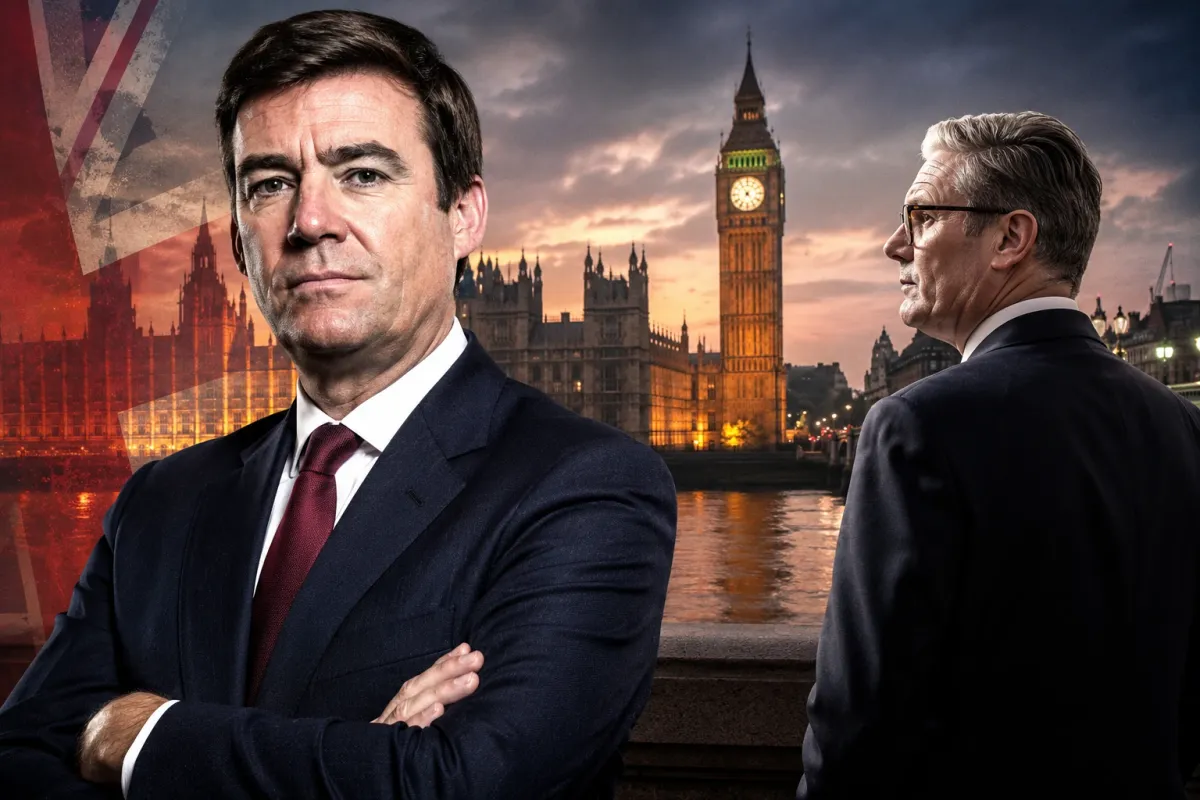
Keir Starmer remains Prime Minister, but his authority is fading fast. As Labour MPs turn restless and Andy Burnham gains momentum, Britain may be witnessing the opening chapter of a leadership battle that could redefine the future of the Labour Party.

Politics has a strange way of turning.
The person who symbolizes victory today can find themselves at the center of resignation rumors tomorrow. A politician who seemed destined to remain on the sidelines can suddenly emerge as the favorite to lead.
That is exactly what is happening in Britain right now.
Not long ago, Keir Starmer Keir Starmer was hailed as the man who brought the Labour Party back to power. He ended years of Conservative dominance and walked through the doors of Number 10 Downing Street as the face of a new political era.
Many believed he would redefine Labour for a generation.
But politics is rarely sentimental.
A series of disappointing local election results has become more than just a setback. Voters have delivered a warning. Within Labour, anxiety has begun to spread. Poll numbers have fallen, confidence has weakened, and conversations once whispered behind closed doors are becoming increasingly difficult to ignore.
Even some who once stood firmly behind Starmer are now speaking a different name.
That name is Andy Burnham Andy Burnham.
The Return of a Political Survivor
Politics, more than anything else, is about timing.
Talented politicians can spend years waiting for their moment. Yet when the political winds shift, fortunes can change almost overnight.
Burnham’s recent return to Parliament feels like one of those moments.
His decisive victory in the Makerfield by-election was about far more than winning a single seat. It was a statement. It signaled that one of Labour’s most recognizable figures was back at the center of national politics.
Almost immediately, commentators began asking the same question:
"Is Andy Burnham the future leader of Labour?"
With each passing day, that question sounds less like speculation and more like a genuine possibility.
The Silence Around Starmer
Political downfalls rarely begin with dramatic confrontations.
More often, they begin quietly.
People stop making eye contact in meetings. Applause becomes less enthusiastic. Public loyalty remains intact, while private conversations take on a very different tone.
That appears to be where Labour finds itself today.
Reports suggest that even senior members of the government have begun discussing what comes after Starmer. No one has openly declared war on the Prime Minister, at least not yet.
But in politics, the most dangerous moment is not open rebellion.
It is when loyalty begins to disappear.
A leader should fear silence more than criticism.
Power Hates a Vacuum
History teaches the same lesson over and over again.
When one political figure weakens, another grows stronger.
When one leader falls, another begins to rise.
What is happening inside Labour is no exception.
As Starmer’s popularity declines, Burnham’s profile continues to grow. His name appears more frequently in headlines, conversations, and political calculations.
And increasingly, people are asking:
"Could he be the one to revive Labour?"
The fascinating part is that nothing has actually been decided.
Starmer remains Prime Minister.
He still holds the authority of office.
He has not formally announced any intention to step aside.
Yet politics often moves long before official statements are made.
Sometimes rumors shape reality faster than resignation letters.
A Long Night in Westminster
Tonight, Britain’s political class finds itself staring into uncertainty.
The lights inside government offices will stay on late. Party officials will run the numbers. Members of Parliament will quietly gauge where their colleagues stand. Journalists will debate tomorrow’s headlines before dawn arrives.
Keir Starmer has not fallen.
But the ground beneath him is undeniably shifting.
Andy Burnham has not reached the summit.
Yet he is increasingly standing in the spotlight.
Politics, in the end, is the art of timing.
What is unfolding inside the Labour Party is not merely a struggle for power. It is a story about whether one political era is coming to an end—or whether it still has enough strength left to survive.
The answer may emerge within weeks.
For now, Britain waits.
And Westminster watches as another decisive chapter in British politics begins to unfold.
Frequently Asked Questions (FAQ)
1. Why is Keir Starmer facing pressure from within the Labour Party?
Starmer has faced criticism following disappointing local election performances and declining public support. Many Labour MPs fear the party could lose momentum under his leadership and are calling for change before the next general election.
2. Who is Andy Burnham?
Andy Burnham is the Mayor of Greater Manchester and a prominent Labour politician. Following a strong by-election victory and his return to Parliament, he is widely viewed as a potential successor to Starmer.
3. Has Keir Starmer announced his resignation?
No. As of now, Starmer remains Prime Minister and Labour leader. However, speculation about his future has intensified amid reports of growing internal opposition.
4. Why is the Makerfield by-election important?
The Makerfield result was seen as more than a local contest. Burnham’s decisive victory strengthened his national profile and fueled discussions about a future Labour leadership challenge.
5. Could Andy Burnham become the next Labour leader?
Many political analysts consider Burnham one of the strongest potential candidates should a leadership contest take place. His popularity among Labour supporters and his experience in local government make him a serious contender.
6. What happens if Labour holds a leadership election?
Labour members, affiliated organizations, and MPs would participate in a formal leadership contest. Candidates would campaign nationwide before a new leader is chosen.
7. How could this affect British politics?
A leadership battle inside Labour could reshape the government’s agenda, alter electoral strategy, and significantly influence the future direction of British politics ahead of the next general election.
8. Is this the biggest crisis of Starmer’s leadership?
Many observers believe it is. While Starmer has survived previous political challenges, the combination of electoral setbacks, falling approval ratings, and rising internal opposition makes this one of the most serious tests of his premiership.